

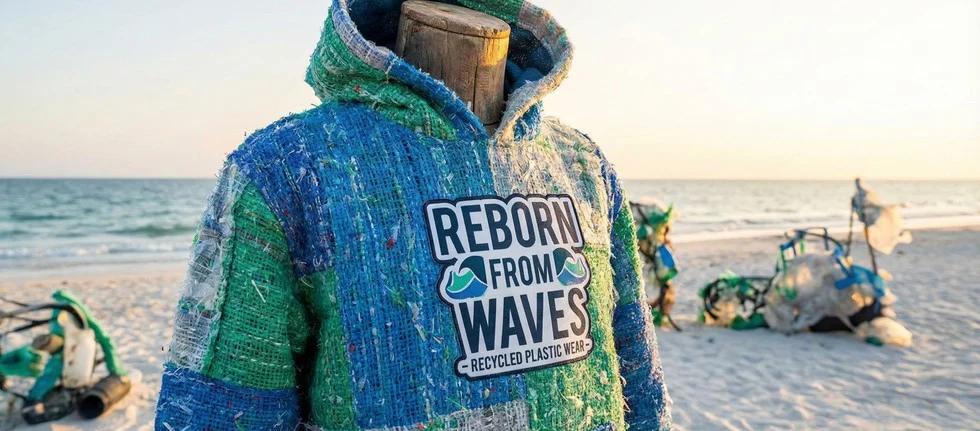
The production of eco-sustainable clothing is generally driven by a desire to reduce environmental impact , but the effect can also be the opposite. This is revealed by a study commissioned by the Changing Markets Foundation and conducted by the Microplastic Research Group at Çukurova University (Turkey), which finds that brands like Nike, Adidas, H&M, Shein, and Zara are actually worsening the situation with their current green policies .
The underlying problem is the use of recycled polyester from used plastic bottles (98% comes from plastic bottles, only 2% from textile waste): many companies today use recycled polyester instead of virgin polyester , a seemingly sustainable choice that, however, hides several threats to the ecosystem. Researchers have found that during washing, recycled polyester generates 55% more microplastic particles than virgin polyester. Consider that a single wash can release up to 900,000 microplastic fibers . Not only that, the microplastics in this case are 20% smaller, and therefore even more dangerous to human health .
THE RESULTS
The study analyzed 51 items of clothing (t-shirts, tops, dresses, shorts) from Adidas, H&M, Nike, Shein, and Zara made from virgin, recycled, and natural synthetic fibers (overall, 3 cotton, 3 recycled polyester, and 3 virgin polyester).
Recycled polyester sheds the most microfibers: 12,000 fibers per gram , 55% more than virgin polyester
the average length of recycled polyester fibres is 0.42mm compared to 0.52mm for virgin polyester
Cotton releases heavier and longer fibres (0.40-0.94mm)
Nike, fresh from a recall by British authorities for greenwashing , was found to be the most polluting brand, losing an average of 30,772 recycled polyester fibers per gram of clothing , four times the average loss of H&M and seven times that of Zara. Below are the values of recycled and virgin polyester fibers released per gram for each brand:
Regarding Shein, there is doubt that the polyester used in the production process is not recycled but virgin—this would seem to be a common practice in the fashion world —since the release of microplastics from recycled polyester garments was found to be the same as that from virgin polyester garments.Percentage of recycled polyester on the total, some examples:
Adidas: 99%
H&M: 94%
Patagonia: 93.6%
Each European produces 35 kg of plastic packaging waste.
Each European produces 35 kg of plastic packaging waste. 15
Technology October 23
Plastic in the world, a problem that shows no signs of abating
Plastic in the world, a problem that shows no signs of abating 10
Item April 14
Therefore, the use of recycled plastic bottles could be interpreted as greenwashing . Furthermore, the waste reduction resulting from bottle reuse— bottle-to-textile —actually translates into a new process of releasing microplastics and resulting in garments that, at the end of their lifespan, cannot be recovered, ending up in landfill or incineration. At the same time, a new competition has arisen between the beverage and fashion sectors, as both strive to secure the supply of plastic bottles.
Fashion has been selling recycled polyester as an eco-friendly solution, but our findings show it’s worsening the problem of microplastic pollution. It exposes recycled polyester for what it is: a sustainable fig leaf covering fashion’s growing reliance on synthetic materials. Smarter design changes and end-of-pipe solutions will only marginally impact the problem. The real solutions lie in reducing and phasing out the production of synthetic fibers and halting the use of plastic bottles to create disposable clothing. – Urska Trunk of Changing Markets Foundation.